
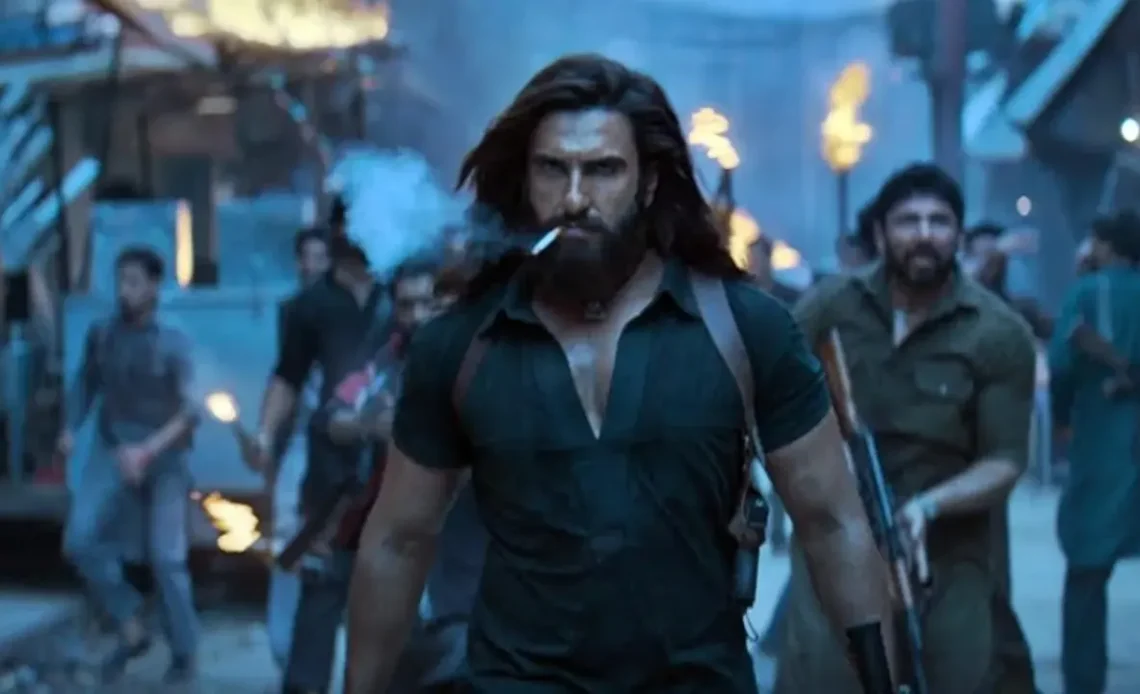
Aditya Dhar’s ‘Dhurandhar’, which is the talk of the town for some time now, is also one of the most polarizing movies lately. The action-political-espionage thriller starring Ranveer Singh, has shattered records to become Bollywood’s highest grosser and is all set to become the biggest Indian movie franchise EVER (both parts collection). However, at the same time, the movie has also been at receiving end of criticism also, because of the politics it portrays.
I personally liked the movie but have strong reservations with its politics. In this blog, I will take a deeper look into movie’s masterful craft and problematic politics. And, since the majority of viewers have already seen it, I think I can spill over some spoilers too (though there won’t be many).
Movie Plot
The movie is the story of Hamza a.k.a. Jaskirat (Ranveer Singh), an Indian spy living under guise of a Baloch man in Pakistan. Working at a small shop in the infamous city of Lyari, Hamza slowly infiltrates into the world of criminal gangs with strong influence in the politics of Karachi, and Pakistan. A line from movie says “Jo Lyari pe raaj karega, wo Karachi pe raaj karega aur jo Karachi pe raaj karega wo pure Pakistan pe raaj karega (Whoever controls Lyari, controls Karachi. And whoever controls Karachi controls Pakistan).”
Slowly, Hamza develops clout as a key aide of Rehman Baloch ‘Dakait’ – a prominent Baloch leader and head of a violent gang in Lyari. He uses the opportunity to gather intelligence from the top corridors of power about the terror operations in India. Hamza wins his trust and upon getting some key details out, colludes with police (SP Aslam Chaudhary played by Sanjay Dutt) to assassinate him. Using the major vacuum created in the politics of Lyari, he helps Rehman’s cousin and close aide Uzair Baloch to finish off the main rival gang of Arshad Pappu and emerge as the ‘King of Lyari’.
Developing access to ISI chief Major Iqbal (Arjun Rampal) and even Dawood Ibrahim, Hamza keeps extracting key information about Pakistan’s terror motives. He also uses his Baloch identity (fictitious) to collude with the Baloch separatists against the Pakistani state – an allegation that Pakistan officially puts on India. After SP Aslam gets suspicious of him, Hamza gets him assassinated as well. Movie’s latter part focuses on the killings of Pak terror operatives by undercover Indian agents – most famously known as the killings by “unknown men” in real life – followed by the final blow to assassinate Major Iqbal and his unit.
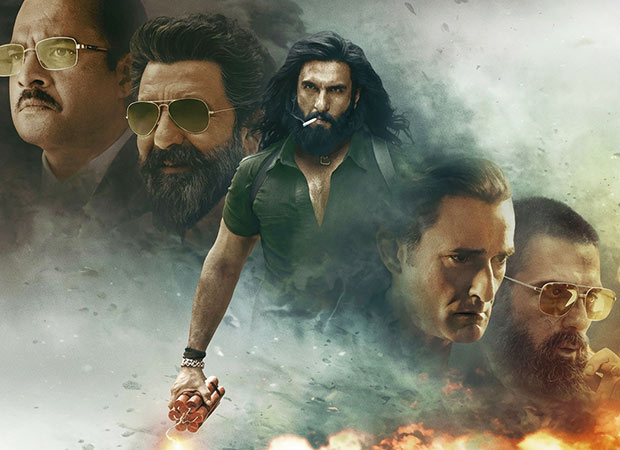
‘Dhurandhar’ has emerged as the biggest Bollywood movie of all time
Filmmaking Aspects
The whole Dhurandhar saga is over seven-and-half hours long, split into two parts. A major achievement of the movie is to keep the audience hooked for this long duration with its gripping screenplay and strong performances.
There is no doubt in saying this is Ranveer Singh’s career-best performance and one of the most COMPLETE performances I have seen in my whole life. The transition of Jaskirat to Hamza is one for the ages, and is a sure shot national award winner. Akshaye Khanna was an absolute show stealer in the first part and Rakesh Bedi was a great surprise package. Sanjay Dutt, Arjun Rampal, R Madhavan and all other actors totally nail their respective roles.
Dhar’s direction is top-class as I highlighted, not just for the gritty screenplay, but for blending the meticulous research and authentic production design, with use of killer music and breathtaking Godfather-level action blocks. The violence level in the movie is definitely beyond normal, and might make many uncomfortable, but since I’m an experienced viewer, it wasn’t that big a deal for me. There were a few unconvincing and technical sequences, but that much is acceptable under creative liberty and mass cinema.

Aditya Dhar has impressed with his masterclass in filmmaking
Petty Politics
The timeline of ‘Dhurandhar’ spans from the ICJ814 Kandahar plane hijack in 1999, followed by 2001 Parliament Attacks, 26/11 Mumbai attacks, 2016 Uri attacks till the current time. The movie tries to present a contrast in the attitude of the Indian government, before and after 2014, towards terrorism. It tries to paint the picture, specifically targeting the UPA regime, that the government was non-serious towards India’s national security. The movie has the famous or rather infamous dialogue by Ajay Sanyal (inspired by Ajit Doval, played by R Madhavan), where the country’s top intelligence chief says, “Ek din aisi sarkar aayegi jisko desh ki chinta hogi…(one day, a government will come that will actually care for the country).
Contrastingly, it depicts that since 2014 there is a sense of massive panic in terror corridor of Pakistan with one scene showing Dawood Ibrahim saying that his men are in ‘panic’ since the “chaiwala” has come to power. Even problematic aspect for me was to create the impression that all non-BJP parties are compromised and are linked with Pakistan in some or the other way. For example, the movie shows Mr Modi’s clip taking oath as the prime minister, with a Pakistani general complaining that they had expected their ‘preferred’ leaders to win.
The biggest brainwashing propaganda in ‘Dhurandhar’ is the whole bloody ‘chapter’ on Demonetization. The movie tries to portray a decision – which even the government doesn’t count in its achievement – as the biggest masterstroke against terror funding while totally ignoring the economic or social impact of the disastrous decision.
Now, this is a very dangerous territory to enter for Mr Dhar. Every person, let alone filmmaker is bound to have some political ideology and inclination. Instead, any filmmaker who doesn’t is irrelevant according to me. And let me be very clear, I don’t have any problem with the ‘anti-Pakistan’ narrative of the film or the hard scenes showing the killing the terrorists. Nor can anyone deny Islamabad’s close association and harbouring of terror agains India. But the problem starts when the movie starts being anti-Congress and positions itself against all non-BJP parties, somehow trying to prove that BJP is the ONLY party which thinks for the country.
Another problematic aspect of ‘Dhurandhar’ is its vile nit picking. While it emphasizes on who is in power during 26/11, it ignores that aspect during Parliament attacks and Kandahar Hijack (because it was NDA). While it shows fear among Pak’s terror circle on Modi’s accession, it ignores that Pakistani PM Nawaz Sharif was in attendance in the very oath ceremony shown in the movie, and that Mr Modi made a surprise unannounced visit to Pakistan just a year later. Also, the real-life deaths of Rehman Dakait, SP Aslam, Major Iqbal happened in the 2009-13 period (when UPA was in power). Now, if the movie shows that Indian agents were behind these deaths, why the time frame of these killings were changed to fit in Mr Modi’s regime? Just to avoid giving any credit to UPA?

‘Dhurandhar’ was very authentic in its portrayal of both people and location
Cancel Culture and Political Movies in India
Now, having highlighted everything I love about ‘Dhurandhar’ and putting out all the criticism I have for the movie, I would like to talk about the polarizing attitude of the viewers. Cinema is bound to be political, because if it’s not, it’s being dishonest. As a movie buff and a student of cinema, I am open to movies of all ideologies. While I absolutely relish movies like ‘Veer Zaara’ and ‘Bajrangi Bhaijaan’ propagating the idea of friendship between two arch-enemy nations, I am also open to a ‘Dhurandhar’ dealing with the hard reality on the terror front.
Though, I don’t even consider movies like ‘Kashmir Files’, ‘Kerala Story’ and other cow-dung brainwash projects as movies, I won’t put ‘Dhurandhar’ in the same ‘propaganda’ bracket because of its core narrative being anti-terrorism. I don’t think anyone who liked Dhurandhar is an inferior audience, but at the same time, I won’t hail it as the ‘biggest masterpiece’ like many, as it played with an easy emotion. At the end of the day, it’s easy to make a movie glorifying the government in power, but hard to make one criticizing it. Mr Dhar chose the latter path, and while, he will be known for directing huge blockbuster, he won’t for being a fearless and honest filmmaker.
Another very important aspect to put out is the state of political movies in India. ‘Dhurandhar’ has its own version of politics and it’s totally fine. But there are many more filmmakers and their movies whose politics is different. In an open and honest country, there should be space for both. While ‘Dhurandhar’, and other pro-BJP cow-dung brainwash movies gets support, funding and promotion from the government itself, many projects on the opposite side of the spectrum fail to even see the light of the day.
Dibakar Banerjee’s ‘Tees’ about the trauma of three generations of a Kashmiri Muslim family has not got a release, because in today’s narrative only a Kashmiri Hindu can be a victim, right? Honey Trehan’s ‘Punjab 95’ about the real-life story of Punjabi human-rights activist Jaswant Singh Kalra – who was abducted and killed by Punjab police – is blocked by the censor board, because only a certain type of Sikh fits in the narrative of ‘New India’. Vikramaditya Motwane’s documentary ‘Indi(r)a’s Emergency’ hasn’t got a release as well, because it might make today’s audience relate to the authoritarian and dystopian policies of today. There are many more projects I can’t even name here, but the fact of the matter is art is a society’s mirror, and while one side is celebrated, the other side too deserves an opportunity to say the least.
Thank You For Your Attention To This Matter

This felt more like a propaganda-driven narrative than a neutral portrayal.
When I cross-checked timelines around Rehman Decait and SP Aslam, there were clear inconsistencies. It didn’t fully align with how several YouTubers are presenting it as “pure facts.”
Also, we’ve seen in real cases like demonetization where narratives and ground realities differed (RBI reported ~99.3% of money returned).
So I think it’s important to question such films rather than accept them at face value. Not everything presented as “true” is necessarily accurate.
Movie wise it was awesome….but when it comes to facts it’s a propaganda.