
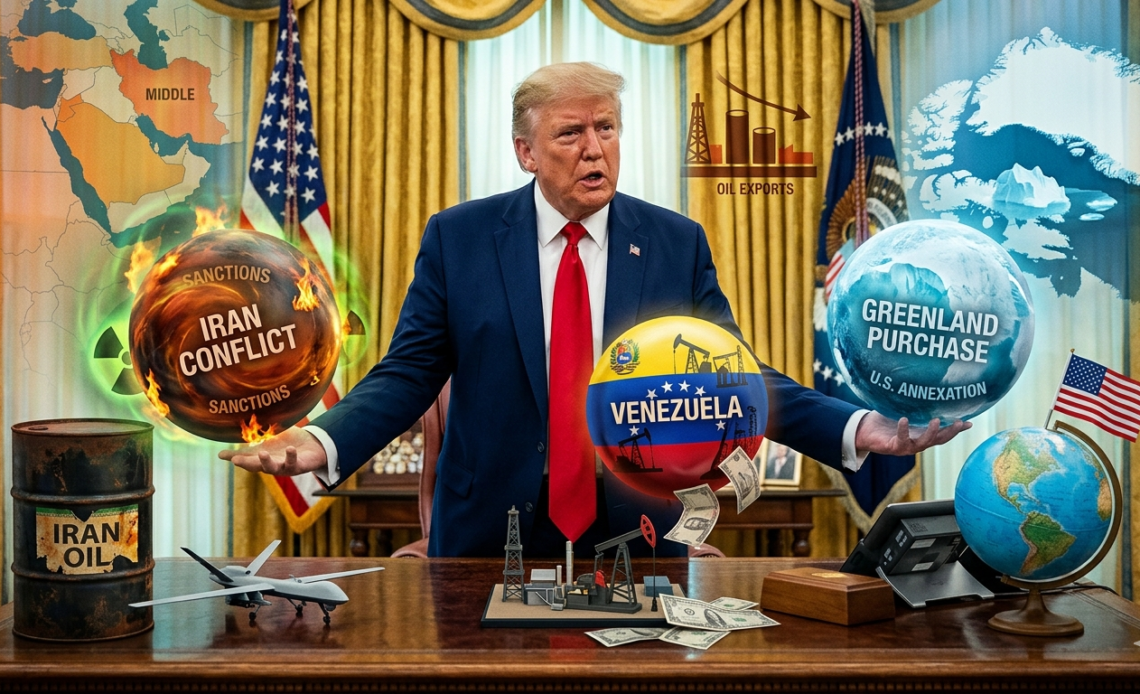
“We will keep America out of foolish, stupid, ridiculous foreign wars,” this is what Donald Trump, the President of the United States had said all while his election campaigning. Yet, till just a week back, the US was fighting perhaps its most unreasonable and clueless war in the middle east.
The recent Iran was not a one-off. The Trump 2.0 has seen multiple action-packed episodes which has presented Mr Trump anything but a ‘President of Peace’. If this is his a to present him for Nobel Peace Prize, it’s quite unconventional. In this Blog, I will talk about the rupture of global diplomacy under Donald Trump’s second tenure.
New Power Dynamics in West Asia and fall of the ‘Muslim World’ myth – Arunesh Blog
Backdrop of Iran Operation
In December-January, massive anti-government protests broke out in Iran amid rising dissatisfaction over economic instability in the country. Incidents of violence and arson were reported in multiple parts including at Iran’s military and religious sites. Some reports even claimed that the protestors have taken control of some pockets.
Iran, which has been under severe sanctions for years, has only limited sources of income and a big chunk of it is kept for sharpening its defence arsenal and funding its proxies in the region. This combined with the regime’s hardline and authoritarian politics has led to huge domestic instability, a result of which is seen in these anti-government protests over different period of time. It’s not as if US and Israel have no role in fanning the anti-government uprising, but still nothing can justify a regime slaughtering its own people.
As the protests intensified, a perception emerged that the Islamic regime’s days in power are numbered. Mr Trump also threatened that US will launch war on Iran if it attacks the protestors, only to backtrack later. But the regime only tightened its grip and unleashed one of the harshest crackdowns in country’s history. From rounding up of protestors, setting fire on whole bazaars (markets), to even killing the injured protestors in hospitals, the country was effectively turned into a warzone. The official death toll stands over 3000, but various international human rights bodies claim the number to be well above 35,000. Many more (including youth and teens) were later executed.

Ayatollah Khamenei, one of the cruelest tyrants in the world died in US-Israeli operation (Photo: Reuters)
Operation Epic Fury, Khamenei’s Death & Strait of Hormuz
The United States and Iran were holding negotiations for a nuclear deal under Omani mediation. On February 27, Oman claimed that a diplomatic breakthrough was within reach. The hopes, however, were short lived, as the very next morning US and Israel jointly launched a massive surprise attack – Operation Epic Fury – on Iran unleashing over 900 strikes in a span of 12 hours. In a defining moment of the operation, the US and Israeli forces located and killed Iran’s supreme leader Ayatollah Khamenei in Tehran. This meticulously planned operation saw Israel hacking Iran’s whole traffic and CCTV camera network to track Khamenei’s movements and eventually locating and killing him.
In addition to Khamenei, Defence Minister Nasirzadeh, IRGC Commander Pakpour and several other key defence officials were also killed in the operation. For a while, it seemed that the Islamic regime was in its last days, but Tehran chose to confront the attack with full might. It launched a flurry of attacks targeting US bases and assets in the region; Saudi Arabia, Kuwait, UAE, Bahrain, Qatar. The attacks even hit civilian infrastructure in these countries leading to several casualties. As the conflict expanded into a regional war, Iran also named its new supreme leader Mojtaba Khamenei (son of assassinated Khamenei) – considered more radical than his late father.

The Minab School Attack was the gravest tragedy of this conflict (Photo: Reuters)
As the conflict raged, the US and Israel called on the Iranian people to take over the streets and throw out the regime. Reza Pehlavi – exiled son of Iran’s ex-ruler Shah Pehlavi – was getting ready to take the next flight and sit on the throne (his video messages gave this impression). However, none of it happened. The Iranian people had just suffered a brutal crackdown just a month back, were perhaps not willing to risk their lives once again for foreign powers. The loss of civilian infrastructure and casualties further worsened the sentiment. A major tragedy occurred when the US, while using outdated data (the location was earlier used by military), ended up striking the Minab girl’s school killing over 168 girl children, leading to a major shift of sentiment against US.
On the other hand, being plummeted with bombs, Iran brought in its geography into the game as a major bargaining chip. It blocked the Strait of Hormuz by putting in underwater mines and threatening to blow up any ships that crossed from the region. Being the sole water transit route in the Persian Gulf, the Strait is responsible for the passing of 20% of oil and gas. By blocking this route, Tehran effectively managed to choke the global economy building pressure not just on the US, but other countries too.

US and Iranian delegations are holding negotiations in Islamabad (Photo: Reuters)
Fragile Ceasefire and Road Ahead
All while the operation, Donald Trump kept shifting the goalpost to somehow appear in control, while in reality he wasn’t. After Khamenei’s assassination, Trump had said that he wanted an “unconditional surrender” from Iran. As things deteriorated with Tehran’s fight back, he kept asserting that US has already achieved all its goals and totally obliterated Iran’s missile and defence system. He even said that US can end the operation and other countries can come and get the Strait of Hormuz opened.
The biggest threat, however, came when Trump set a deadline of Tuesday 8 PM Eastern Time, after which, he said the US will target Iran’s civilian infrastructure and turn it into “stone age”. Just hours ahead of his deadline, he posted an extremely dangerous statement, “A whole civilization will die tonight, never to be brought back”. At this point, things looked actually dire. However, less than an hour ahead of the deadline, Trump announced a two-week ceasefire, negotiated by Pakistan.
Following the pause in hostilities, US and Iran are holding negotiations in Islamabad for a new nuclear deal. The ceasefire, however, stands on fragile waters. The first major contradiction appeared right when Israel continued pounding Lebanon, even though Iran and Pakistan claimed that Lebanon too was part of the ceasefire agreement. Other than that, both US and Iran have kept claiming certain things which the other has denied. While Trump says US will remove all the enriched uranium and ‘nuclear dust’ from Iran, Tehran’s statement in Persian, claimed that Iran’s nuclear enrichment will survive. There is no certainty whether the Islamabad Talks will succeed or not (I genuinely want them to), considering how maximalist both sides are. But there is no doubt the conflict has changed the region forever.
Did US won the battle? Maybe not, but unlike the social media narrative, it has managed to weaken and isolate Tehran significantly. Though, Iran will claim victory after surviving in this David vs Goliath battle, but the fact is it will find itself much more isolated in the region after the hell it unleashed on its neighbors. With its proxies further weakened and growing resentment at home, it’s ride ahead won’t be very comfortable. Israel, the most important character, is undoubtedly the biggest war monger in the region. A state of continuous war suits Benjamin Netanyahu in his domestic politics (He sought another postponement in his corruption case amid this war). It was a totally unneeded conflict for the US, which it entered solely on Netanyahu’s conviction. Considering the control Israel exerts over US through its powerful lobby and other moles/secrets, there can be no guarantee how long the peace will last in the region.

Nicolas Maduro was abducted by US forces after a security operation (Photo: Reuters)
Regime Change in Venezuela
Donald Trump, and the Unite d States had problems with Venezuela’s Maduro regime for very long. The US has accused Venezuela of harboring and facilitating durg cartels in the region. Washington even went on to indict Maduro himself on charges of narco trafficking with a $15 million bounty by his name (figure was raised to $50 million by Trump administration). The Trump administration also launched lethal maritime strikes on alleged drug-trafficking vessels in the region.
However, unlike what the US wants the world to believe, the real reason of increased US interest in the region was…oil. Venezuela has world’s LARGEST proven oil reserves in the world. The US wanted it to open its economy for the US companies and allow its oil companies there.
Historically, Venezuela was a close US ally with strong defence and economic ties till the Cold War years. However, as Hugo Chavez ascended to power with his socialist and anti-imperialism politics, he changed the status quo. Chavez kicked out big US firms like ExxonMobil and ConocoPhillips out of the country, after they refused to cede majority control to Caracas. Following this, the US imposed sweeping sanctions on Venezuela leading to crumbling economy and domestic unrest. The situation only intensified under Chavez’s successor Nicolas Maduro with US increasing its gear to “maximum pressure campaign”.
Maduro’s unpopularity in Venezuela had peaked after he retained power by rigging the 2024 elections. Banking on this domestic unrest and shattered economy, Trump gave an ultimatum to Maduro to resign while guaranteeing a safe stay in exile, an offer that was refused. Not just that, Maduro even brushed off the US allegations and mocked Trump on a couple of occasions while copying his dance steps. That was just the last nail in the coffin (However funny it sounds, but it’s true).
Decoding DHURANDHAR’s brilliant filmmaking, poor politics – Arunesh Blog
On January 3, Trump administration carried out Operation Absolute Resolve, launching large-scale strikes totally decapitating Venezuela’s air defences and power infrastructure. At around 2 am local time, US’ Delta Force unit landed in the presidential palace and captured Maduro and his wife Cilia Flores and brought them to US. This was a highly planned and coordinated attack, whose planning took weeks with the CIA and US forces creating a dummy of the whole palace to ‘rehearse’ this whole operation.
The very next day, Venezuelan vice president Delcy Rodriguez was sworn in a president. This came as surprise for many as the opposition leader Maria Machado – who also technically won the 2024 polls – was a strong contender for a ‘regime change’. However, despite all her coziness towards Trump (even presented her Nobel Prize to him), Trump said she is ‘unfit’ for this job and trusted Delcy for it. A report from Guardian said that Delcy Rodriguez was very well a part of Trump’s month-long mission. On expected lines, Washington opened its embassy in Caracas, dropped all sanctions on Venezuela, struck a major 50-million-barrel oil deal. Though, the major US oil firms still have concerns taking their business there considering the crude there being thicker than usual, things are shaping up well in that direction.
Now, after putting down the whole story, there can be no doubt how this whole operation was a major violation of Venezuela’s sovereignty. The brain behind this was US Secretary of State Marco Rubio, who I have no doubt in calling the most powerful non-president leader in US since Henry Kissinger. Mr Rubio has played an instrumental role in shaping Trump’s world view of establishing complete dominance in the Western hemisphere. But experts rightly say this episode, if anything, will only empower China and Russia to carry out similar adventures in their backyard, and at that time US’ quotes on sovereignty and dialogue won’t matter.
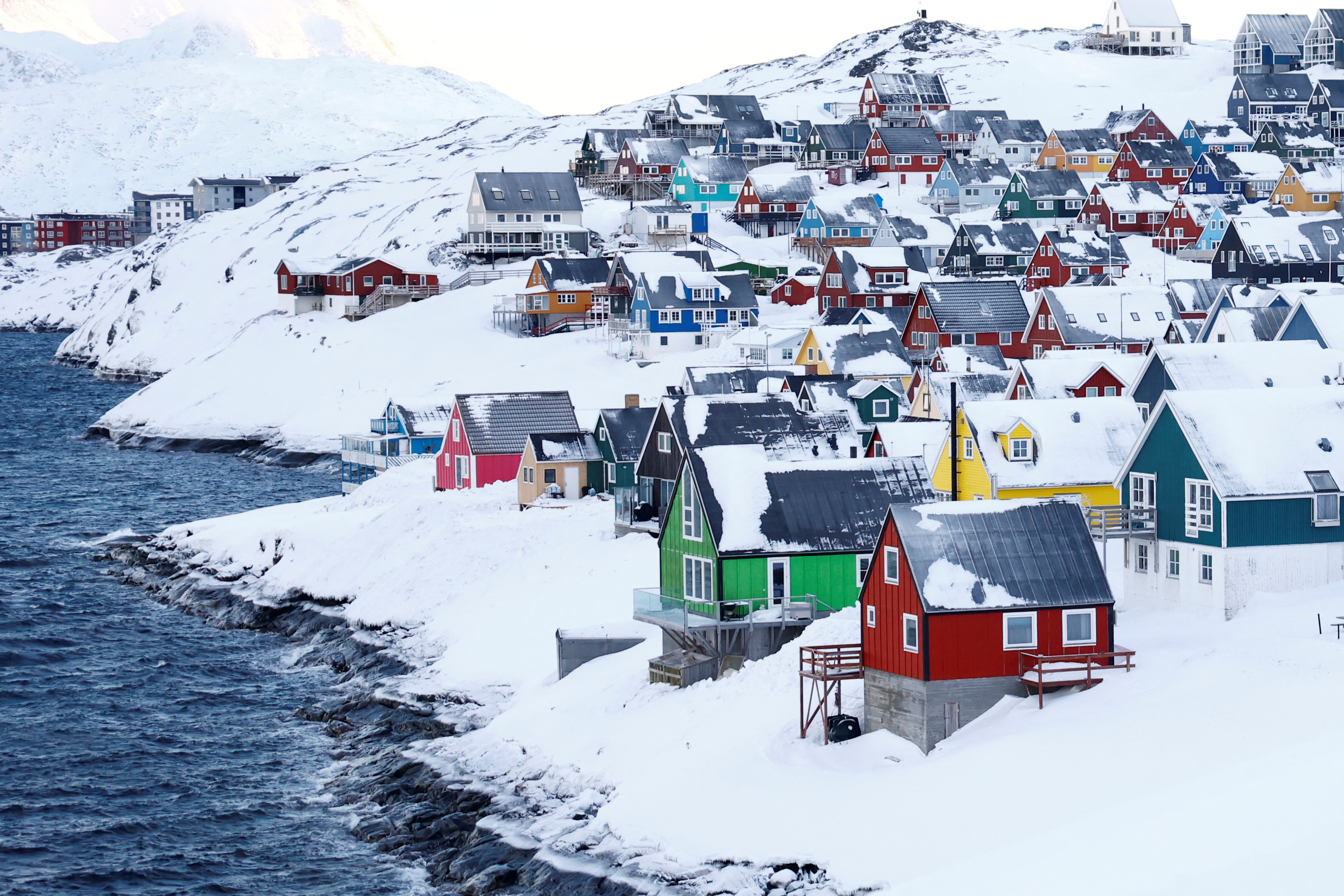
The resource-rich island of Greenland has been at forefront of Trump’s energy (Photo: Reuters)
Greenland Obsession
Another big obsession of Mr Trump has been Greenland – world’s largest island, autonomous entity but comes under the Danish Kingdom. The US President has been demanding the territory to be handed over to the United States (despite how weird it sounds). Trump has called the acquisition a ‘necessity’ for Washington’s national security. Warning against rising Chinese and Russian naval activity in the region, he terms Greenland pivotal for US’ ‘Golden Dome’ initiative (multibillion dollar missile defense system). Another big reason behind Trump’s interest is the vast reserves of mineral and rare earth elements on the island. Considering how fast Greenland’s ice is melting, experts believe the island’s resources will exceed $2.5 trillion in valuation soon.
Mr Trump’s demand, on expected lines, has received major flak from Greenland, Denmark and the whole Europe, who all have called it a violation of Greenland and Denmark. The row heated up when Trump threatened 25% tariffs on the whole European Union. The tensions cooled a bit when NATO chief Mark Rutte held long discussions with Trump regarding a possible future framework for the deal. Reports indicate an agreement could be reached where US will retain some pockets of the island for its specific mineral exploration and military expansion needs.

Cuba has been under immense strain over power blockade (Photo: Reuters)
Are Mexico and Cuba next?
If you though this much adventure was enough for one presidential term, well you’re wrong. Trump’s latest thaw appears to be Cuba – the communist state in Caribbean. He has termed Cuba an “extraordinary threat” and imposed a total blockade barring any countries from supplying oil to Cuba. With the regime change in Venezuela and Mexico under tariff threats, Cuba is suffering a total collapse of power grid leading to over 20-hour blackouts daily.
US long considers Cuba – the only communist-ruled country outside Asia – a threat for its national security. Ever since Fidel Castro nationalized the country (1959), including US properties, Washington (then President Eisenhower) imposed a trade blockade on Cuba. Considered close to China and Russia, US has accused Havana of hosting and supporting its adversaries. Trump has even called for Cuban President Miguel Díaz-Canel’s resignation and another friendly takeover by the US. With Cuba actually feeling the pinch of blockade, the future of the island amid US’ ambitions remains uncertain.
Another nation at odds with the Trump administration is Mexico. Ever since the start of his term, and even in the last term, Trump has been very attacking on Mexico over drug cartels and fentanyl crisis. After Trump threatened 25% tariffs on Mexico, the new president Claudia Sheinbaum deployed 10,000 national guard soldiers on border to curb trafficking. In another concession, her government also handed over 93 high-ranking drug cartel figures to the US outside of formal deportation procedure. Though, the current status between Mexico and Washington remains under control, but we can never say never in today’s diplomatic environment.
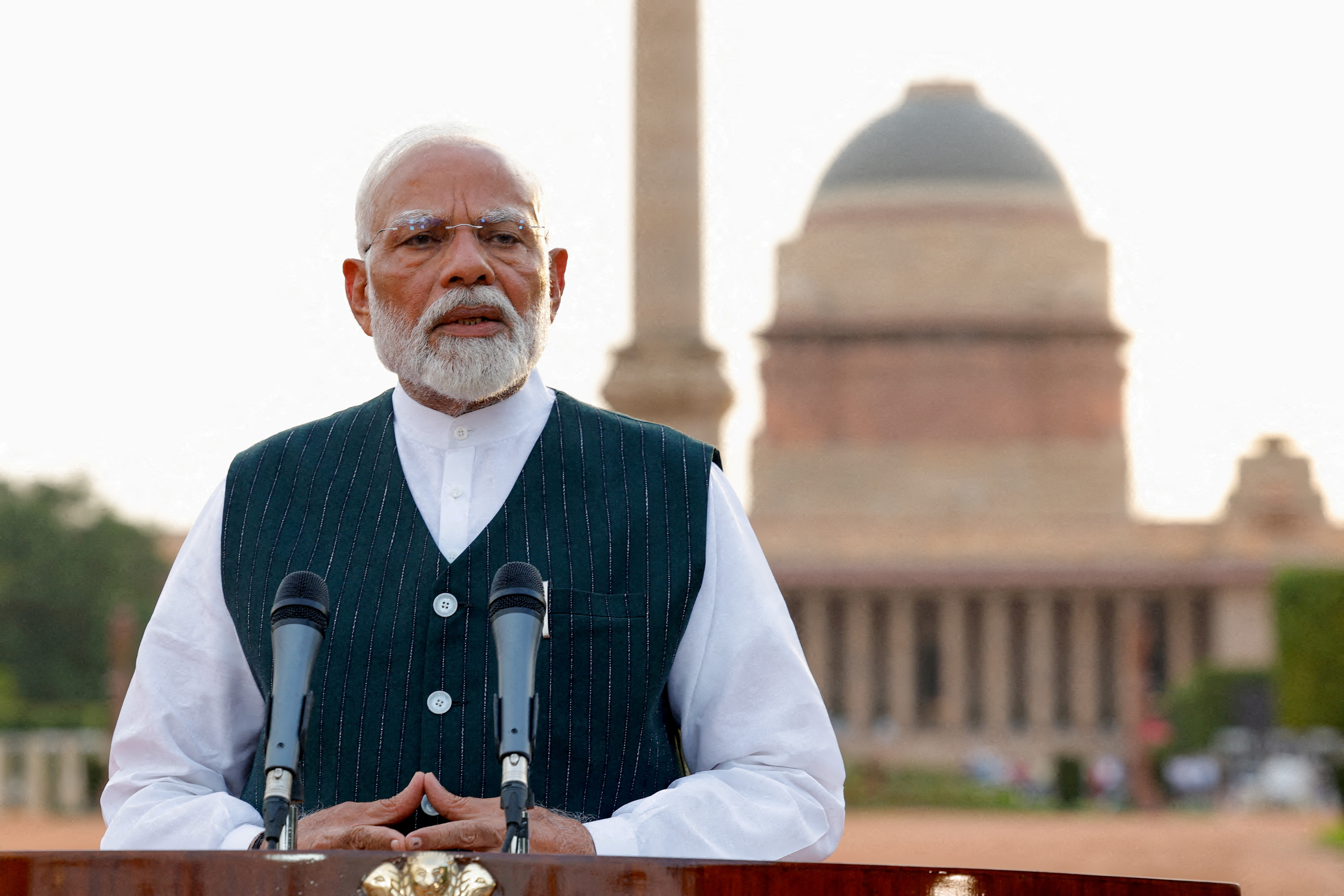
PM Modi has faced criticism of ‘weak’ foreign policy posturing lately (Photo: Reuters)
Has India done enough diplomatically?
Now, while all these massive episodes transpired across the world, a legitimate question arises, what was India’s position in these situations, considering the ‘Vishwa Guru’ posturing of the current Modi regime. Well, to be frank, India had little to no role in all except one episode, and that was the Iran war. Many critics have argued that India should taken a firmer stand during this whole conflict instead of being a mute spectator. Now, I do understand the reasoning behind not attacking the US directly, but issuing a simple condolence message on Khamenei’s killing or a condemning the attack on Iran’s naval ship in Indian Ocean wouldn’t have been as harmful as many think.
The biggest disaster, however, was Mr Modi’s visit to Israel just 2 days before it launched the operation on Iran. Any sane person with foreign policy updates knew that a conflict is brewing in the region. And considering the proximity between Modi and Nentanyahu, there is no doubt that the Indian PM had at least some hint. All this presented India totally in the US-Israel camp, as against age-old ties with Iran. However, later Iran did agree to exempt Indian ships (along with Chinese and Pakistani) to safely pass through the Strait of Hormuz, the episode could have been handled better.
India has faced major challenges on the foreign policy front, especially in Mr Modi’s third term. From navigating Trump’s tariff puzzle to managing the narrative following Operation Sindoor against Pakistan, New Delhi hasn’t been at the best of its form. Not anticipating the fuel crisis has also hurt the government domestically as both opposition and critics have attacked government’s handling of the situation.
On the other hand, Pakistan has emerged as quite a surprise package on the diplomatic front. From offering its land for US bases and minerals mining, to inking cryptocurrency deals between the Pakistani government and World Liberty Financial – US crypto company where Trump family has majority stake – Islamabad seemed more ready for the Trump headwind in the second term after not so good outing in his first term. Despite country’s tallest leader, Imran Khan, being in jail and domestic unrest, Field Marshal and de-facto head Asim Munir has managed the country better than what many including me had expected. The defence pact with Saudi, improving economic metrics and the ongoing mediation role has actually placed the country in a much better condition than a year ago.
Now, while India’s foreign minister S Jaishankar can brush off Pak’s role as a “dalaal”, the truth is India lost an opportunity by failing to appear neutral in the conflict. Considering the jubilant visits by Mr Modi to both Russia and Ukraine and the boasting of multi-pronged foreign policy, the current episode will go down as a missed opportunity. Even if India wouldn’t have been the mediator, it should have been at least a voice, and most importantly a neutral one.
Thank You For Your Attention To This Matter