
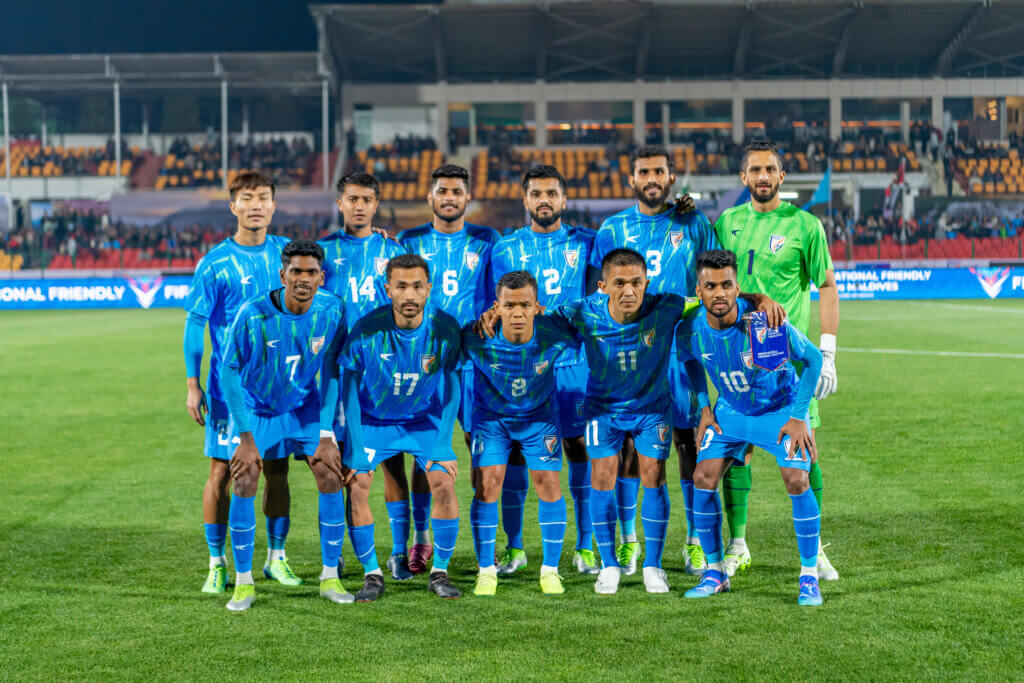
As we enjoy the just concluded FIFA World Cup 2026 where Spain created history with their second title, I think it’s a good time to reflect on the situation of Indian football. For a country that celebrates everything from Brazil to Argentina, Messi to Ronaldo and Manchester United to Barcelona, it’s indeed surprising that its own football board is in disaster and national league is dead. For context, India currently ranks 139 in FIFA rankings – lower than countries like Syria, North Korea and even Palestine.
If anything, the FIFA WC 2026 will be remembered for the spirited performance of teams like Cape Verde, Senegal, Japan. If a country like Curacao (whose whole population can fit inside Ahmedabad’s Modi Stadium) can qualify what is stopping India with its 1.5 billion population from even coming near to it.
But what if I tell you India was an Asian powerhouse of the game at one point in time. So much so, that it was called the ‘Brazil of Asia’ and hailed as the game’s next ‘superpower’. So, in this blog I will try to decode the alarming collapse of Indian football, and what could be the remedial steps for its resurgence.
Sneak into our Glory Days
Football came in India with the Britishers, just like other colonial games. Initially it was played in clubs, colleges and military regiments. Just like many other things under the colonial rule, Calcutta also emerged as the capital of Indian football. Slowly the game expanded into other parts of the country, mostly through the army regiments.
In 1888, Asia’s oldest ever league, the Durand Cup birthed one of the oldest teams in the world – Mohan Bagan. After partition, as refugees from East Bengal came to India, they formed the other major team from Calcutta – East Bengal. The Mohan Bagan v East Bengal rivalry continues to shape the city’s love affair with the game even today. In 1911, the team scripted history by winning the prestigious IFA Shield, becoming the first non-British team to win the tournament and marking a watershed moment for Indian football.
However, India’s golden phase in football came after independence, and a huge credit for which goes to one man – Syed Abdul Rahim. After taking over as India’s coach in 1950, he led the team to victory in Asia Cup the very next year, and then again in 1962. India even finished a historic fourth at the 1956 Olympics, first Asian team to achieve the feat. But, more than just the medals, Mr Rahim united the players from different parts of the country into one unit. Instead of the conventional style of kicking ball high in the air, he guided the team to make passes on ground. His 4-2-4 formation surprised many and was later also adopted by the legendary Brazil team. This golden era earned Indian team the title of ‘Brazil of Asia’.
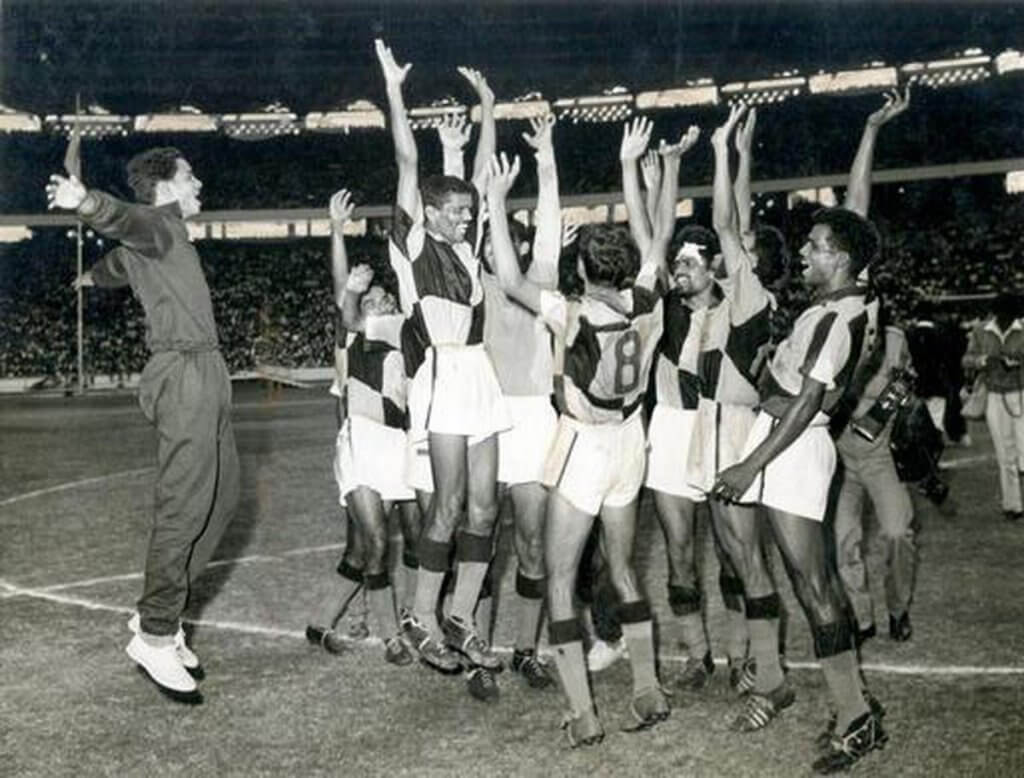
Syed Abdul Rahim led the golden age of Indian football for over a decade (Photo: AIFF)
Fall from Grace
But India’s golden days didn’t age that well. After Mr Rahim’s death in 1963 from cancer, his style and techniques also got buried along with him. India really struggled with the new coaches as the country saw 40 coaches in next 40 years. This issue even persists today as India only has 14 pro licensed coaches (those with highest qualification and technically eligible to coach), which is not even one-tenth of any ‘proper’ football playing nation.
Another huge problem with the Indian system is the extremely incompetent and clueless All India Football Federation (AIFF). Despite football games being played for 90 minutes, India’s domestic games were kept of only 50 minutes for very long, due to which the player’s stamina never developed for global competition. Also, till 1953, Indian players played barefoot not because they couldn’t purchase shoes, but because the board didn’t find it important enough, even though it was evident that shoes helped in controlling the ball better. The drawback was seen in the 1952 Helsinki Olympics where the team badly struggled on cold icy ground. It was only after FIFA made shoes mandatory in 1953, that India moved for it.
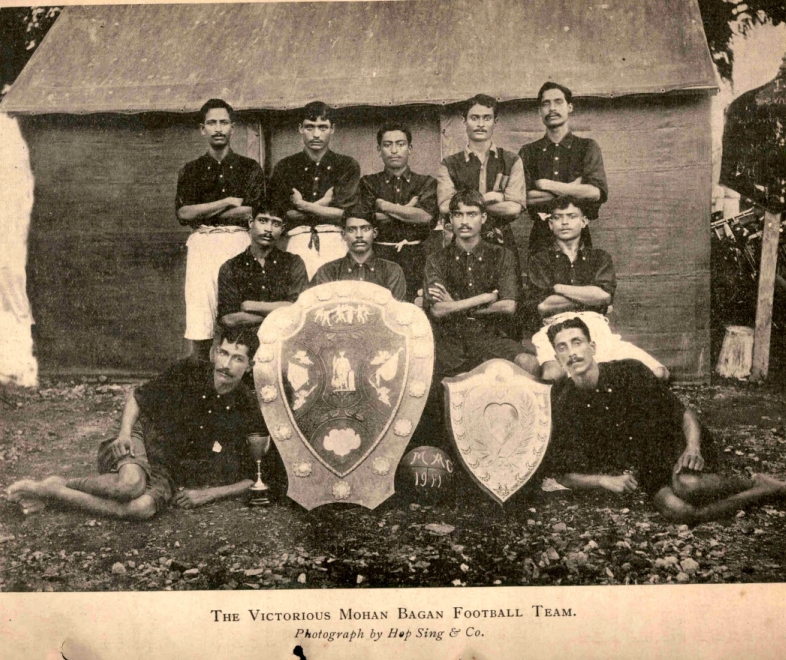
The victorious Mohan Bagan team that defeated Britain’s Yorkshire Regiment team (Photo: Wikipedia)
Also, it’s a common myth that India couldn’t play the 1950 FIFA WC because it didn’t have shoes. In reality, India despite having an invitation, chose to not send the team citing logistical and financial costs. However, AIFF’s lethargic attitude towards WC persisted, as from 1954 to 1982, India didn’t even send a team for FIFA WC qualification as it didn’t consider it ‘important’ enough and believed only Olympic matters. AIFF’s situation has remained more or less same. In 2022, FIFA suspended AIFF for “undue influence from third parties”. The major reason was Mr Praful Patel – NCP leader (NDA camp) and head of AIFF – not holding board elections for years. Though, the suspension was lifted within 10 days, it showed the dire structure of India’s football administration.
Finally, perhaps the biggest flaw in India’s whole football ecosystem is the way clubs and national teams are structured. As I said above, Calcutta emerged as India’s football capital as most of the football was being played here. Over the years, the Calcutta clubs were so strong that they used to pay their players (only state where it was happening). As a result, and due to low pay by AIFF, many Indian players preferred to play for their clubs instead of the national team, and even when they played there was dissatisfaction and a lack of national spirit.
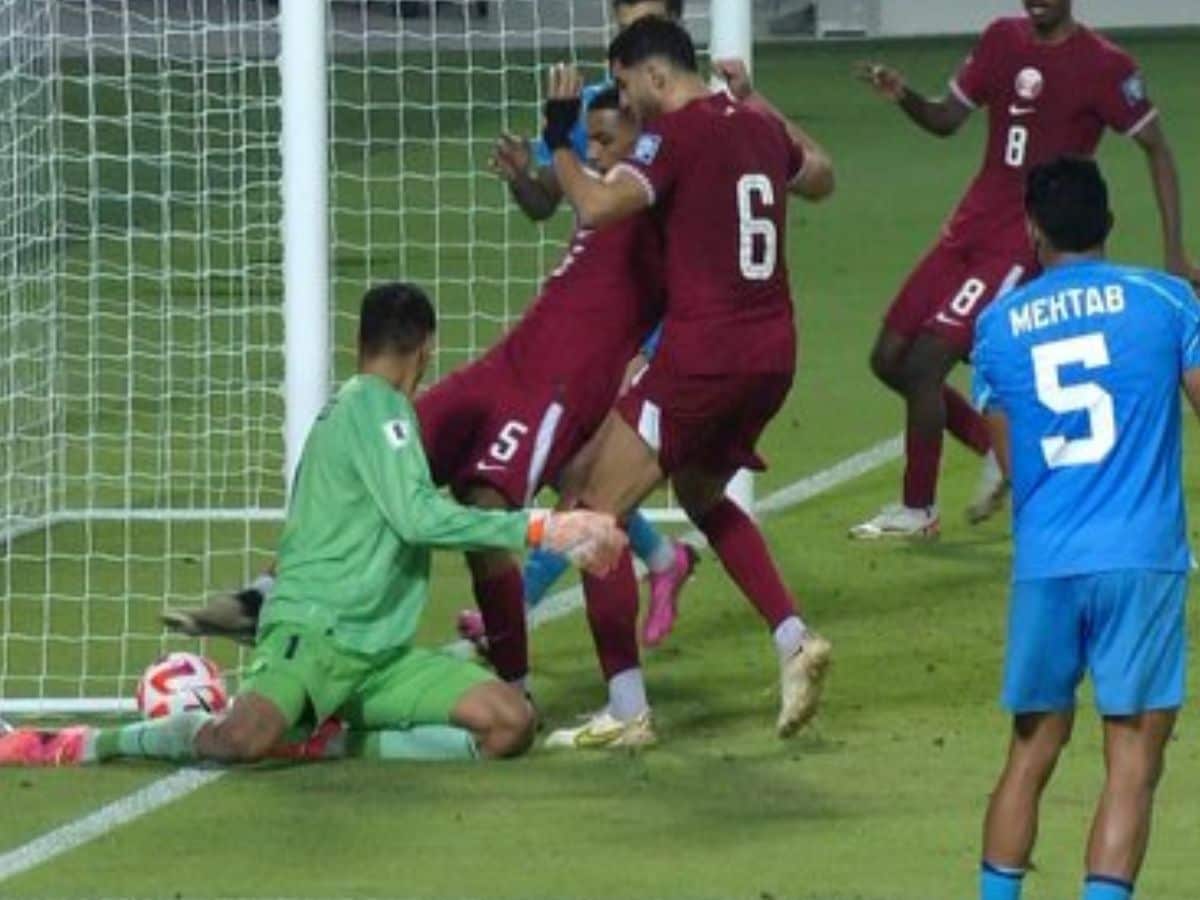
The controversial loss against Qatar was a huge heartbreak that demoralized the whole team (Photo: News18)
The Collapse of India’s League Structure
In every country, the leagues play an important role in the growth of football, actually any sports. The biggest example of this happens to be the English Premier League (EPL). The strongest feature of this system is the concept of multi-tier leagues with Promotion & Relegation (the top 3 teams from every league goes to the upper tier league next year and the last 3 teams go to the lower tier league) which keeps all the teams on their toes and rewards good performances. Also, it’s mandatory for the clubs to manage youth football clubs for scouting young talents, which keeps the young talents thriving. The efficiency of this system can be understood by the fact that while Premier League and its clubs generate £9.8 billion for the UK economy, the local grassroot level football clubs also generate £15.9 billion.
On the same lines, leagues are thriving in other European and South American nations as well as in Africa, Asia and even America now. And this is exactly where India has faltered most badly. In 2010, the AIFF signed a mega ₹700 crore Masters Right Agreement (MRA) with IMG-Reliance for 15 years. The deal birthed Football Sports Development Limited (FSDL) which officially launched the Indian Super League in 2014, trying to cash in on the already blockbuster IPL model. However, the envisioned idea suffered from major shortcomings.

India’s Minnerva Club created history by winning back-to-back Gothia Cup (Photo: Facebook)
Firstly, the league failed to get on board as big names as IPL, both on and off the field, due to which it lagged both in terms of grabbing eyeballs, and offering mouthwatering contracts. Some global names who came, even they left soon. Secondly, knowingly or unknowingly, the ISL emerged as a rival league for I-League (India’s premier football league with rich history) creating an unnecessary standoff within the country. Owing to commercial obligations, AIFF pressured the Asian Football Confederation (AFC) to make ISL as India’s main league and push I-League to secondary status. Thirdly, this whole structure had no relegation-promotion model or tier structure. This meant there were no incentives or pressure for the teams in both I-League and ISL, which seriously affected the quality of Indian football in general.
At the end of 15 years, the already fragile structured league collapsed like anything. The revenue model turned out really inefficient as most franchises were losing money in the absence of a lucrative deal. During negotiations, the FSDL and clubs demanded a joint ownership, profit-sharing and 10-year freeze on relegation. The AIFF, on the other hand, wanted to retain complete administrative power. The negotiations broke and it left both the clubs and players reeling forcing key players like Sunil Chhetri urging the authorities to save the league. Eventually, the country’s Sports Ministry intervened to broker an emergency handing the tournament’s management to the 14 teams, but the game quality and viewership has remained abysmal.
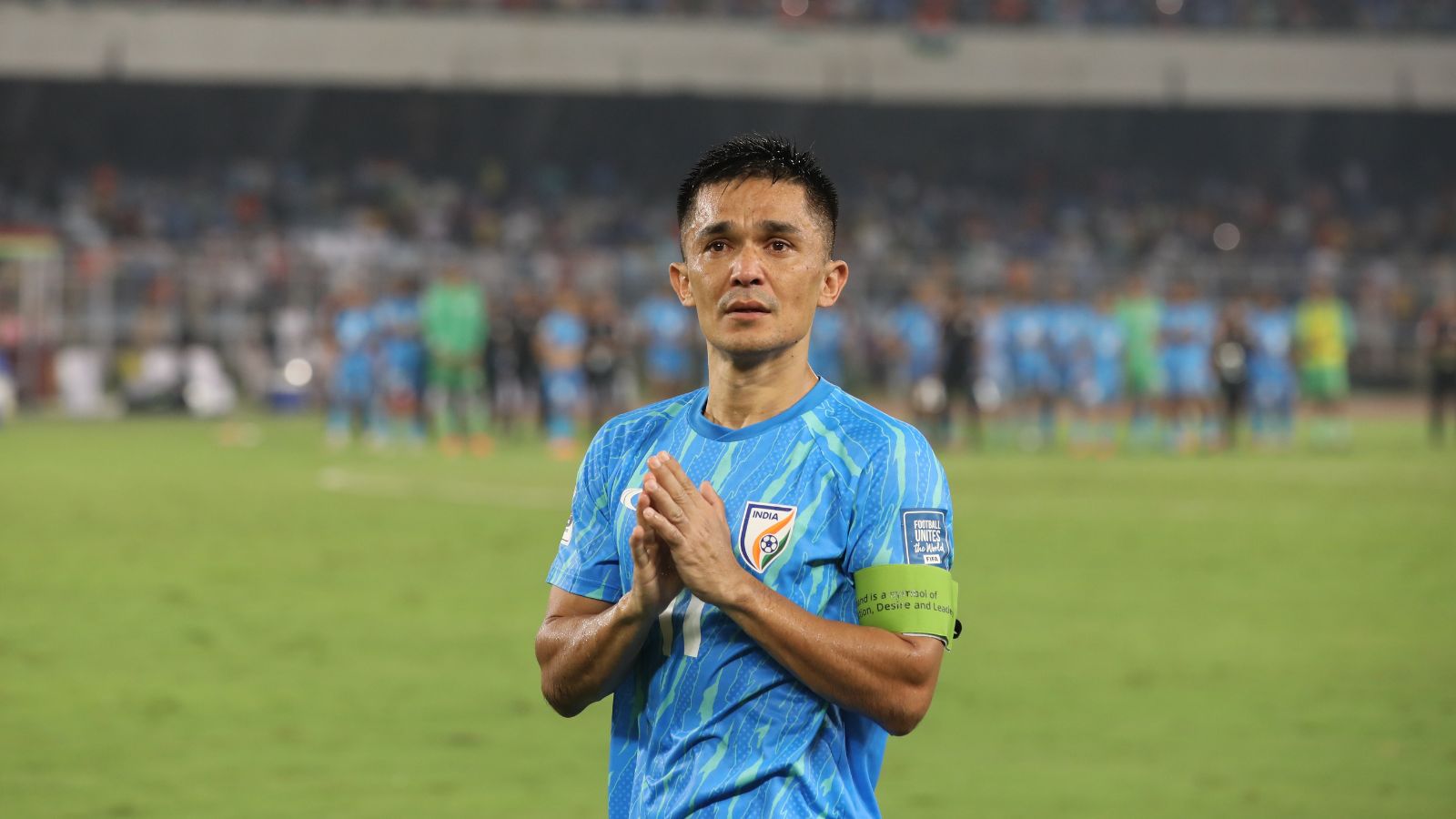
Sunil Chhetri has almost single-handedly carried the national team this generation (Photo: The Indian Express)
Struggling National Team
The impact of all this chaos at club level was bound to mar the national performance. After qualifying for the AFC Asian Cup in 2011 for the first time in 27 years, the team saw a shocking downfall reaching its lowest FIFA ranking in history (173). It marked a decent comeback under English coach Stephen Constantine reaching two-decade high ranking of 96, but the structural problems persisted. The whole burden seemingly remained on one person – Sunil Chhetri, a legend and one of the world’s all-time goalscorers.
Then came the massive heartbreak against Qatar, where India lost a close 1-2 in a heavily controversial game, after the South Korean referee allowed a goal even when the ball had clearly gone outside the line, making the play dead. India lost passage to Round 3 of FIFA WC Qualifiers and also the automatic qualification of 2027 Asian Cup. This was followed by a massive freefall with losses against teams like Bangladesh, Nepal and Afghanistan plummeting India’s FIFA ranking to 139. All this was further compounded by Sunil Chhetri’s retirement, who eventually had to take back his retirement looking at the team in shambles. How disastrous the condition was can be understood by the reports that India’s ex-coach Igor Stimac allegedly used astrologers to select India’s Playing XI.
Need for Structural Changes
It’s a no brainer that Indian football needs a massive reform and some tough decisions. The primary thing which needs to be done is a proper overhaul of the current league system. It would be preferrable if we keep one among ISL and I-League or merge them altogether into a multi-tier system. There is an urgent need to pump in good money both at the level of board administration and clubs to ensure the financial security of players. This also involves investing heavily in youth clubs and school-college level football. Ranjit Bajaj’s Minerva Academy is doing wonders winning global youth titles including the prestigious Gothia Cup. We need to cash in on such talents with strong planning and execution.
Another idea which has been floated many times, though may not be a permanent solution but can bring some respite, is allowing Indian-origin foreign players to play for India even with OCI cards. Currently, only those with Indian passports can play for India. There are some big names like Yan Dhanda, Danny Batth, and Sarpreet Singh who if allowed to play for India with OCI cards can be of great help. Also, since European leagues only allow foreign players from countries up to certain rankings, Indian players are unable to play in overseas leagues unless they surrender their Indian passport, doing which would eventually rob them of donning Indian colours. Allowing some leniency in this area can do Indian football much good.
Finally, and most importantly, a point Sunil Chhetri himself has strongly and repeatedly made. Catching and mentoring talents at young age. And here, ‘young’ means 5-7 years (yes, you read it right). All major football playing nations identify their talents at very young age, because once you miss catching them in that particular phase, you’ll never be able to mold them into world-class players. At any point, you should be able to say that you have the track of ALL of your best talents in the country. This is something which applies to every sport in general. So, these are some areas where we need to dedicatedly work on and give our people who love the game of football so deeply, a chance to celebrate their own country too. Glory Indian Football!
JAI HIND
THANK YOU FOR YOUR ATTENTION TO THIS MATTER