
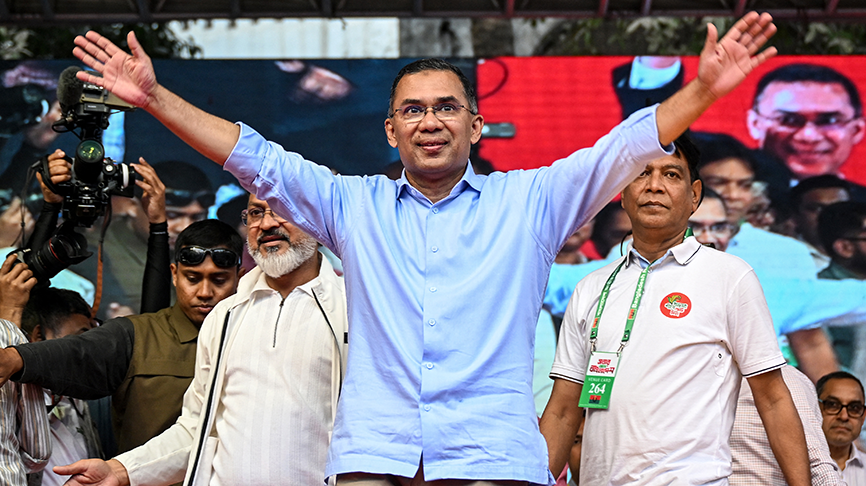
In August 2024, Bangladesh, a country that once gave a sense of calm in the neighbourhood, went a major political upheaval as student protests against the country’s reservation system turned into a huge and violent anti-government movement forcing then Prime Minister Sheikh Hasina to resign and flee the country. After that, the army took control and handed power to an interim government led by Nobel laureate and economist, Muhammad Yunus.
After much flip and flop, the interim government held the general elections on February 12, in which the Bangladesh Nationalist Party (BNP) came out victorious with a handsome margin. This election might not be the most ideal, but is definitely better than the worse that could’ve happened. In this Blog, I will explain the intricacies of this poll results and what it means for the India-Bangladesh ties.
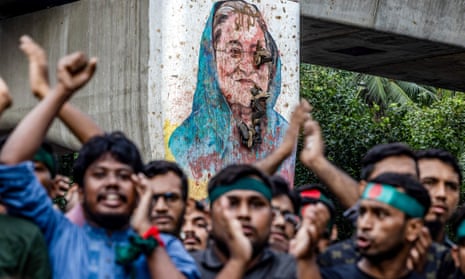
Sheikh Hasina’s stay in India has been a point of contention between India and Bangladesh (Photo: Guardian)
Hasina’s Exit and Refuge
Sheikh Hasina, the daughter of Bangladesh’s founding father Sheikh Mujibur Rahman, was one of the most consequential leaders in Bangladesh’s history. The five-time PM oversaw the most economically progressive years for the country. During her long reign, ties with India blossomed creating a strong and reliable partnership between New Delhi and Dhaka.
However, every good thing has an upside. For Hasina, it was her iron fist rule that believed in keeping every criticism and opposition at bay. She was fighting against the rising Islamic radicalism, but her handling of the situation remained under radar. Allegations of human rights excesses, jailing of critics, journalists and opposition alike slowly became the hallmark of her rule. In another consequential step, Hasina in 2011, removed the rule of holding elections under a neutral caretaker government, and herself oversaw the next 3 elections – which the critics and opposition labelled absolute ‘sham’.
I have covered the whole episode of student protests and Hasina’s ouster in details in a previous blog
Ever since Hasina fled Bangladesh and took refuge in India, her stay has been a huge point of contention between New Delhi and Dhaka. The interim government in Bangladesh, on multiple occasions, expressed displeasure on India hosting Hasina – accused of mass killings – on its soil. Initially, there were reports that Hasina might be looking for exile in the United Kingdom or the United Arab Emirates. But, here we are…it’s close to 2 years and the ex-PM continues to stay in a secure (most probably lavish too) location in the Lutyens Delhi. Even concerning aspect of Hasina’s stay has been that she has continued to make political statements against the interim regime in Bangladesh.
Now, this is where the problem starts. India’s proximity to Hasina was the main reason behind the thaw in its ties with Bangladesh. With she being given refuge here and even allowed to make strong political statements, New Delhi clearly appears in the Hasina camp. On top of this, in November 2025, the ex-PM was convicted of crimes against humanity by the International Crimes Tribunal (ICT) – a body earlier used by Hasina’s party to try and execute people for 1971 genocide. Though, Hasina has called the trial in absentia “unfair”, calls for her extradition has grown putting India in a tough spot as New Delhi and Dhaka do have an extradition treaty (meaning it has to extradite her if a formal request comes backed with solid evidence).

Attacks on Hindus in Bangladesh and India’s overblown response has not helped their ties (Photo: NYT)
Why Was India’s Stand Problematic?
India is placed in one of the most complex and uncertain neighbourhoods. And in bid to maintain healthy ties with everyone (barring 1), it has to appear neutral and hold warm relations with anyone who is in power. But India’s stand for Bangladesh has been extremely clueless and hypocritical.
I already explained above how keeping Hasina here, even after the national sentiment mounted against her and she was convicted of crimes against humanity back home, has deemed problematic for India diplomatically. Additionally, India has taken a stand which repeatedly appeared as pro-Hasina and against the interim regime.
India repeatedly expressed deep concerns on the targeted attacks on Hindu minorities in Bangladesh. Now, principally I agree with New Delhi on it. It’s the duty of EVERY government to protect their citizens, especially the MINORITIES. But as a foreign government you should not overdo anything. Remember how India brushes off any concerns about minorities in India raised by foreign countries/bodies calling it New Delhi’s “internal matter”. So why can’t Dhaka make a similar assertion? Yes, the interim regime too made some unneeded statements, which I’ll discuss in a while, but more maturity and calmness was expected from India.
And if all this was not enough, the Modi government decided to ruin the ties further just days before the elections. Notably, Prime Minister Modi had earlier prayed for the recovery of former Prime Minister Begum Khalida Zia during her illness and, following her demise, sent External Affairs Minister S. Jaishankar to attend her funeral along with a personal letter. This was India’s outreach to BNP – which seemed most poised to get power – before the elections.
But, just two days after Jaishankar’s visit, BCCI out of nowhere, decided to expel Mustafizur Rahman – only player selected from Bangladesh – from the IPL without providing any reason just citing “recent developments”. It’s no brainer that this move was extremely insulting for Bangladesh. Surprisingly, this call was taken without any consultations with the MEA. I don’t even have words to express how disastrous this whole episode was for India. You can’t make decisions involving foreign policy ramifications based on the opinion on social media and right-wing outfits.
In a tit-for-tat move, Bangladesh decided to withdraw from T20WC if it’s not provided a neutral venue, citing security of players. India’s clout in cricketing world meant Bangladesh’s demand wasn’t paid heed and it was replaced by Scotland in the tournament. Pakistan’s attempt to take stand for Bangladesh by threatening to not play the India game (only to play it later) though was just a show of optics, but it further brought Pakistan and Bangladesh closer diplomatically. India might seem to have its way through in the episode, but diplomatically it was the biggest loser.
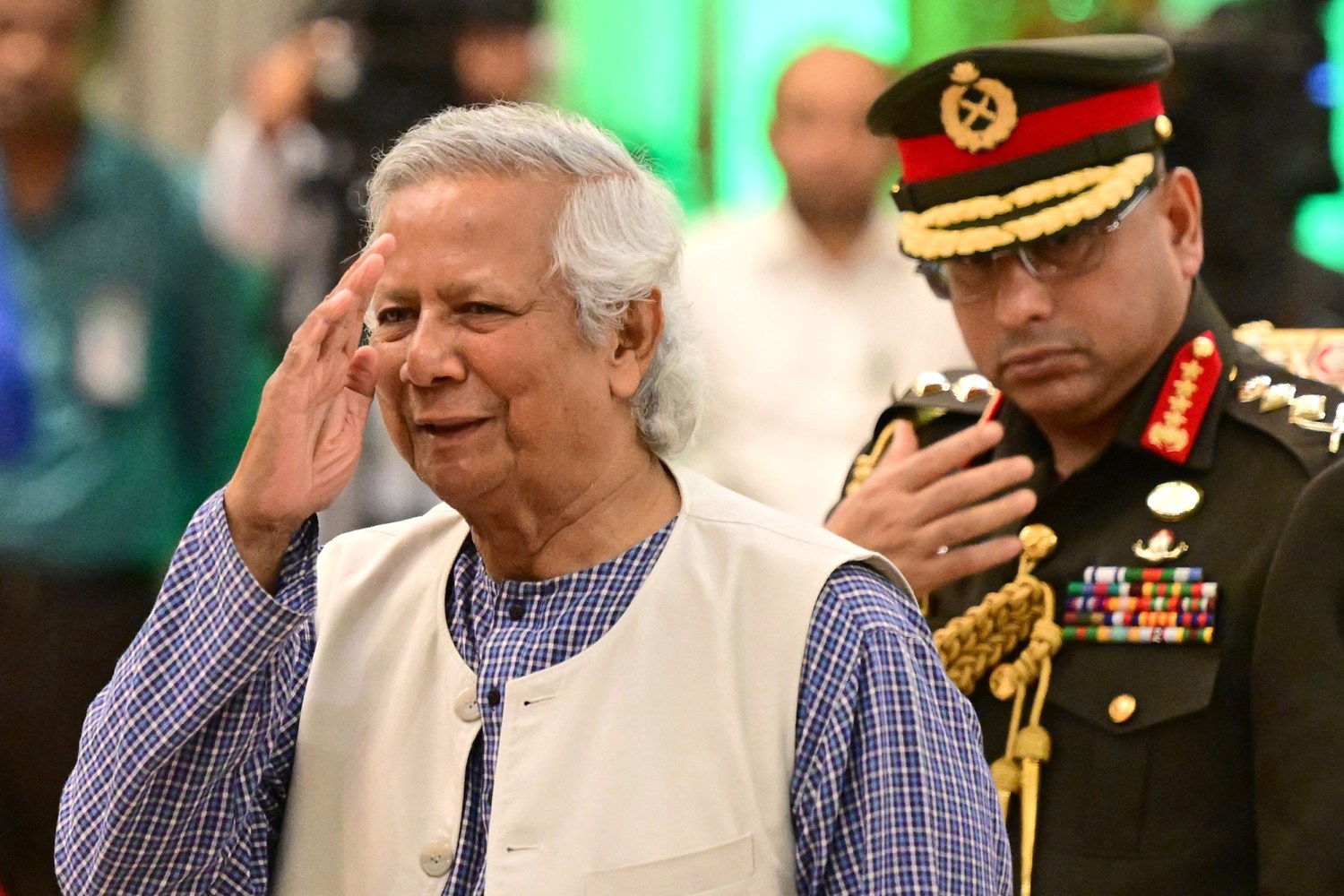
Muhammad Yunus’ interim regime had a mixed tenure of 1.5 years (Photo: NBC News)
How did Yunus Regime fare?
Now, this question will always get a mixed response, not just outside but also inside Bangladesh. Yunus was invited to take over as the chief of the interim government by the protesting students. Many viewed this as an arrangement helped and supported by the Joe Biden administration in the US. There is no denying that when Mr Yunus took the helm, it was turbulent times for the country after the fall of a decade-long regime. In his first address, he urged the youth to ensure no minority is attacked. But later he also received criticism for not doing enough towards the plight of minorities. Arrests were made in the specific cases, but the regime kept labelling these incidents as ‘isolated’ and didn’t issue any strong condemnation of the Islamist mobs.
Over time his position kept coming under repeated scrutiny. Firstly, he revoked the ban on Jamaat – a hardliner Islamist party, which has also been accused of siding with Pakistan during the 1971 genocide in Bangladesh. Now, the argument presented was to allow every ideology a say in the elections. But the same argument wasn’t applied while imposing a blanket ban on Sheikh Hasina’s Awami League. Yes, there is no denying that the then-ruling party did have a role in the violence and targeting of young protestors, but the party still has the support of around 25-30% of the country’s voters.
The other problematic aspect of Yunus’ regime was it tried to do some stuff, which technically should be done by an ‘elected’ government. The interim government brought in a July Charter (simple words, amendments to Constitution). The Charter puts two-term limit on prime ministers, increases share of women representation, and more significantly adopts “Bangladeshi” as a more inclusive national identity while removing the principle of ‘secularism’ and instead keeping pluralism, equality and democracy.
On the election day, the voters had to make two choices; vote for the candidate and approve/disprove the Charter. But interestingly the voters only had the option of ‘yes’ or ‘no’ for the charter, so there was nothing a voter can do, who agrees with some but disagrees with other aspects of the charter. Eventually, the charter was adopted with close to 70% approval. Also, when the BNP eventually took oath as government, its leaders only took oath as MPs and refused the second oath as members of the Constitution Reform Council questioning its constitutional validity.
The Yunus regime also tried to salvage Dhaka’s ties with Islamabad. Now, this is significant in multiple aspects. Firstly, the very creation of Bangladesh was made out of, and against the idea of Pakistan. Not just that, the Pakistani army was accused of carrying out mass rape, torture and human rights violation during the 1971 revolt. Now, I can understand if the two countries want to make a new beginning. But isn’t such a crucial foreign policy decision a domain of the elected government? What if the next elected government has a different stand?
Lastly, there were some absolutely unnecessary remarks by Mr Yunus himself about India’s northeast and the Bay of Bengal region. On more than one occasion, he said Bangladesh is the “only guardian” of the Bay of Bengal in the region, as the “Seven Sisters” (he didn’t mention India’s) are “landlocked”. This remark clearly provoking for India as it questioned not just New Delhi’s sovereignty but also its capability in the seas. He even made a similar assertion in his last address.
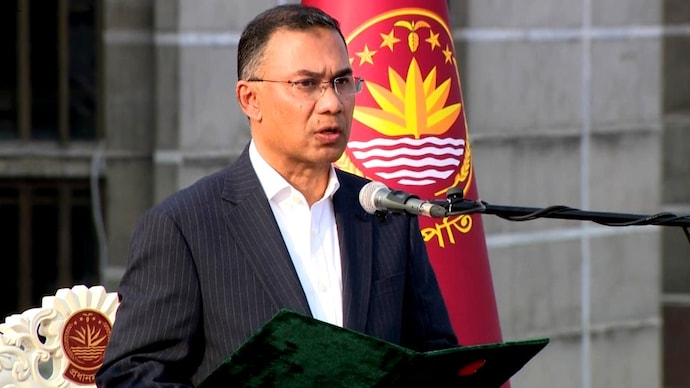
Tarique Rahman took oath as Bangladesh’s first male PM in over 3 decades (Photo: India Today)
Election Results
As Awami League was banned from the polls, the major players in the game were Khaleda Zia’s Bangladesh Nationalist Party (BNP) which was led by her son Tarique Rahman, the Jamaat, which was making its comeback in the electoral ban after long, and the National Citizen’s Party (NCP) formed by the student protestors of the 2024 uprising. The BNP was one of the oldest parties in the country and had strong roots and cadre across the country, despite not contesting the last elections (2024) as most of its leaders were in jail or exile (Even Begum Zia was under house arrest with ailing health).
On the other hand, the NCP was a very new party and its base was concentrated mainly in Dhaka, that too among the youth. The Jamaat too had its support in pockets, though its student wing – Chhatra Shibir – had recently won the Dhaka University polls, which was significant. Eventually, just months before the elections, the NCP and Jamaat forged an alliance. This was a major shift for the NCP birthed by student protestors demanding a new politics from the old guards. This alliance especially alienated the female leaders of NCP, considering the anti-women and theocratic ideology of Jamaat (they’ve openly said women are secondary to men, and are unfit to lead the country).
Eventually, the BNP-led alliance stormed to power with comprehensive 216 seats in the 300-member assembly. The 11-party alliance led by Jamaat came a distant second with 68 seats. NCP managed only 6 seats out of the 30 it contested, though its main leader Nahid Islam won his seat becoming one of the youngest MPs of Bangladesh. The people’s mandate was clear. They voted for a stable democratic government. They did approve the structural changes of the July Charter but decided to trust a more experienced party like BNP for it, instead of hardliner Jamaat or untested NCP.
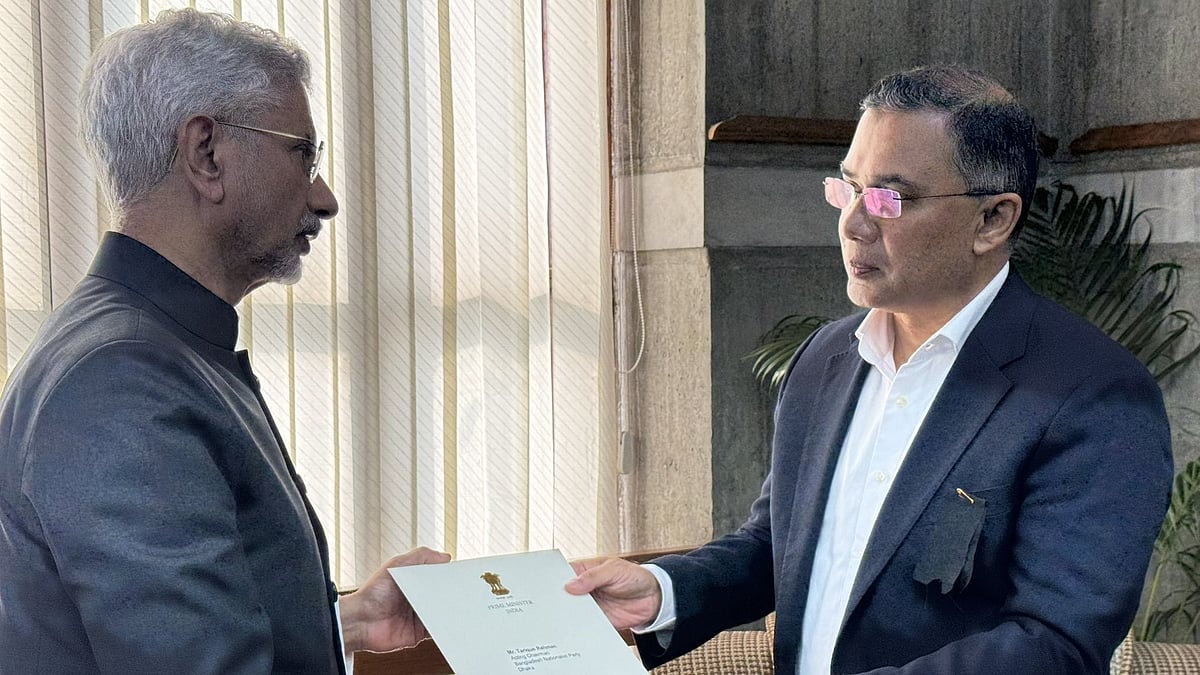
Jaishankar met Rahman after Khaleda Zia’s death showcasing India’s outreach to new regime (Free Press Journal)
Road Ahead
Bangladesh got its first male prime minister in over three decades. In all this years, the country’s fortunes were decided by the two begums – Khaleda Zia and Sheikh Hasina. Now, Tarique Rahman, who is inheriting his mother’s legacy, has a huge task in hand in reviving Bangladesh, especially after the huge churn the county plunged into after the 2024 uprising. The last BNP government didn’t have a very pleasing outcome as political violence and corruption remained a key hallmark of the time (not that it wasn’t the case under Hasina). Mr Rahman himself was accused of corruption and got the name of ‘Dark Prince’, before he went to exile after cases were piled up against him, which he called “politically motivated”.
Bangladesh happens to be a urbanized and mature country with female literacy and workforce participation. The people’ mandate made it clear that a huge majority doesn’t want a radical and Islamist Bangladesh that Jamaat stands for. The women and even the Awami League voters turned to BNP in this election. However, that doesn’t change the fact that Jamaat still managed to emerge as the principal opposition party and will play a key role in shaping the country’s politics going forward. I genuinely hope Bangladesh revives and lives up to the idea for which lived, fought and birthed a new nation – ‘Amar Sonar Bangla’.
From India’s point of view, it is a good time to revamp its deteriorating ties with Bangladesh. Though, the last BNP regime was not very friendly with New Delhi, the Modi government has showed the outreach for a new start. It’s very crucial for India to have good ties with Bangladesh considering its complex neighbourhood. For start, India needs to keep Bangladesh out of its domestic political discourse and take it as a partnership of equals. Using ‘Bangladeshi’ as an abuse won’t help its case any day. Secondly, India should ask Hasina to take refuge in a third but safe country (I’m baffled how India has continued to host her till now). Her further stay will only worsen the anti-India rhetoric in Bangladesh. Thirdly, with Pakistan and China both trying to forge strong ties with Bangladesh, New Delhi needs to build on the initial outreach shown by Mr Modi, and work on building long-term partnerships that transcends the government of the day.
Thank You For Your Attention To This Matter